



Shaping stone edges on granite, marble, quartz, or concrete slabs requires getting the right profile without spending hours hand-sanding out deep gouges. Whether you are prepping a countertop for a smooth bullnose edge, shaping a sink cutout, or leveling flat edge faces, using the wrong grinding wheel geometry will waste time and ruin your finish.
Three grinding wheel shapes dominate stone fabrication shops: Flat wheels, Convex wheels, and Vacuum Brazed Profile wheels. Here is a practical look at how each shape works, where they fit into your edge-shaping workflow, and how to choose the right wheel for your project.
Understanding Flat Diamond Grinding Wheels
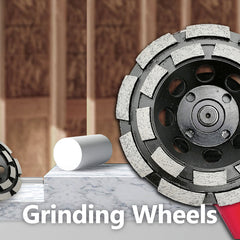
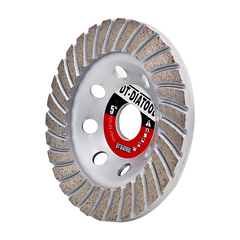
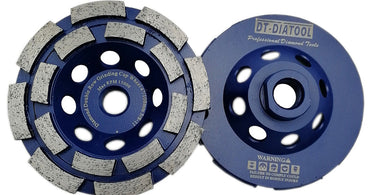
Flat grinding wheels (often called diamond cup wheels) feature a wide, flat abrasive face lined with metal segments, vacuum brazed diamonds, or resin-bonded matrices.
Best For: Rapid stock removal, leveling rough saw cuts, squaring up slab edges, and flattening high spots on stone or concrete.
How They Work: Flat cup wheels cover a wide surface area per pass. They act as heavy-duty levelers that quickly clean up rough bridge saw marks along straight edges before you start profiling or polishing.
When to Use Them: Use flat wheels at the start of your project to square up slab edges, fix uneven cuts, or grind down thick lipage. Avoid using flat wheels on tight inner curves, as their straight face can dig sharp corners into the stone.
Understanding Convex Diamond Grinding Wheels
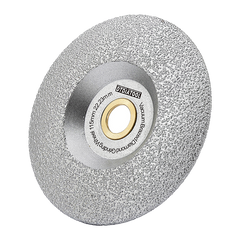
Convex grinding wheels feature a rounded, domed outer edge rather than a flat face. This curved profile allows the edge of the wheel to work smoothly inside rounded surfaces without catching or digging into the slab.
Best For: Shaping inner curves, sink cutouts, archways, and oval countertop shapes.
How They Work: The rounded profile fits smoothly into tight concave radii. Instead of leaving sharp gouges like a flat wheel edge would, a convex wheel glides along inner curves to grind out rough saw marks evenly.
When to Use Them: If you are cutting out undermount sink openings or shaping curved bar tops, a convex cup wheel is essential for smoothing out the rough curve before moving on to polishing drums.
Understanding Vacuum Brazed Profile Wheels
Profile wheels (also called router bits or edge profiling wheels) are pre-shaped to match specific architectural edge profiles, such as Full Bullnose, Half Bullnose, Ogee, Bevel, or Demibullnose.
Best For: Shaping consistent, uniform edge profiles along straight slabs, island tops, and vanity counters in a single pass.
How They Work: Vacuum brazed profile wheels feature a solid steel body engineered with built-in top and side guides. The diamond layer is fused across the exact shape of the desired profile. As you run the wheel along the edge of the slab, the guides prevent the bit from cutting too deep, duplicating the exact profile along the entire length of the stone.
When to Use Them: Use profile wheels when you need factory-consistent, repeatable edge shapes on countertops, stair treads, or wall caps without relying on freehand shaping.
Quick Selection Guide for Your Edge Project
Straight Edges and Squaring: Choose Flat Cup Wheels for heavy material removal, leveling saw cuts, and flat edge cleanup.
Inner Curves and Sink Cutouts: Choose Convex Wheels for smooth radius grinding, curved cutouts, and inner edge smoothing.
Standard Countertop Profiles (Bullnose, Ogee, Bevel): Choose Vacuum Brazed Profile Wheels for fast, uniform edge shaping along straight or slightly curved slabs.
Key Factors to Consider When Choosing Your Wheel
-
Diamond Bond Type: Metal bond segment wheels work best for heavy grinding on granite and hard concrete. Vacuum brazed wheels are ideal for medium-to-heavy profiling on marble, engineered quartz, and porcelain slabs because they cut sharp without chipping surface glazes.
-
Machine Compatibility and Threading: Make sure your grinding wheels match your tool setup. Standard angle grinders and wet polishers typically use M14 threads (in Europe and international markets) or 5/8"-11 threads (in North America).
-
Wet vs. Dry Operation: Dry grinding works fine for quick touch-ups on job sites, but wet grinding keeps diamond dust down, keeps the stone cool, and significantly extends the life of your diamond tooling.
Why Fabricators Rely on DT-DIATOOL Grinding Wheels
At DT-DIATOOL, we build jobsite-ready diamond tools engineered for stone fabricators, tile installers, and masonry contractors.
Superior Diamond Concentration: Formulated with premium synthetic diamond grit bound securely to withstand high RPM grinding on granite, quartz, and concrete.
Precision Balanced Steel Bodies: DT-DIATOOL profile and cup wheels are dynamic-balanced to reduce grinder vibration, preventing hand fatigue and eliminating chatter marks on delicate stone faces.
Complete Range of Profiles and Sizes: We carry a full lineup of flat cup wheels, convex wheels, and vacuum brazed profile bits in popular shapes (Full Bullnose, Ogee, Bevel, Demi-Bullnose) with M14 or 5/8"-11 threaded arbors.
Tips for Better Edge Grinding Results
Let the Tool Work: Do not force or slam the wheel into the stone edge. Gentle, consistent pressure lets the diamond grit grind cleanly without bogging down your grinder motor.
Keep Your Movement Fluid: When using profile wheels, keep the tool moving steadily along the slab edge. Stopping in one spot can wear a slight dip into soft stone like marble.
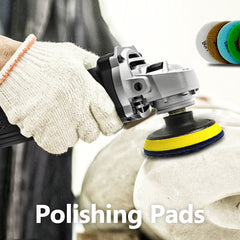
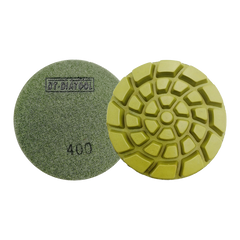
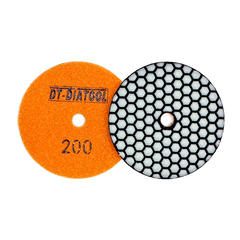
Work Through Proper Steps: Always complete your rough shaping with a coarse grinding wheel before moving on to flexible diamond polishing pads. Trying to shape a rough profile directly with polishing pads will destroy the pads in minutes.