




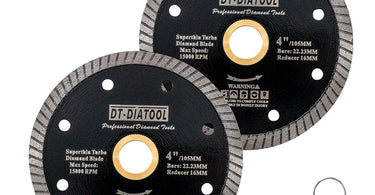
If you have ever tried cutting dense porcelain tile with a basic continuous rim or segmented blade, you know how frustrating chipped edges, slow cutting, and warped steel cores can be. Modern porcelain is engineered to be extremely dense, non-porous, and hard—often matching granite in sheer toughness.
To get clean, chip-free cuts through hard porcelain without burning out your tools, choosing the right blade geometry makes all the difference.
Among tile installers and stone fabricators, three blade designs come up most often: Turbo, Mesh Turbo, and X-Mesh diamond blades. Here is a practical look at how each rim design works, how they perform on porcelain, and which one belongs in your angle grinder or wet saw.
Understanding the 3 Rim Designs
1. Standard Turbo Diamond Blades
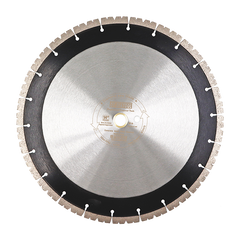
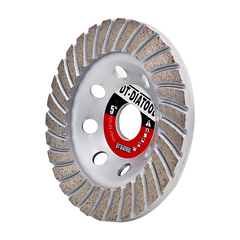
Standard turbo blades feature a continuous wavy or corrugated rim. The serrated edges act like small fan blades, throwing ceramic dust out of the cut zone and pulling air in to keep heat down better than a flat continuous rim blade.
Best For: Fast rough cuts on brick, concrete, wall tile, and general masonry.
Porcelain Performance: Cuts quickly, but the thick segments tend to bite into the surface glaze, leaving noticeable micro-chips along the cut line.
2. Mesh Turbo Diamond Blades
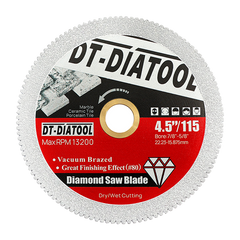
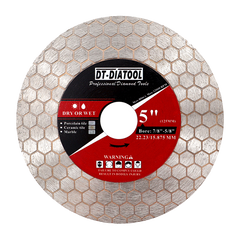
Mesh turbo blades use a thin-kerf steel core lined with fine honeycomb-style mesh grooves across the rim. This pattern cuts down friction while keeping a steady, smooth contact patch against the tile face.
Best For: Fast, clean cuts on medium-to-hard ceramic, floor porcelain, and marble.
Porcelain Performance: Drastically cuts down edge chipping while maintaining impressive cutting speed.
3. X-Mesh Diamond Blades
X-Mesh blades feature a tight, interlocking "X" pattern stamped into the diamond rim. This crisscross geometry distributes the cutting force evenly across the surface while creating tiny relief channels that throw out dust and heat instantly.
Best For: Ultra-clean, chip-free precision cuts on high-density porcelain, sintered stone, and glass tile.
Porcelain Performance: Leaves clean factory-style edges on hard porcelain with virtually zero glaze chipping.
Head-to-Head Comparison for Porcelain Tile
Standard Turbo: Fast speed, moderate chip resistance, standard blade thickness. Best for rough cuts or buried edges.
Mesh Turbo: Very fast speed, high chip resistance, thin-kerf design. Best for high-volume floor and wall tile installs.
X-Mesh Blade: Controlled speed, maximum chip resistance, ultra-thin kerf. Best for miter joints, exposed edges, and premium porcelain slabs.
Key Factors When Cutting Porcelain
1. Heat Control and Dust Removal
Heat warps steel cores and cracks porcelain. Standard turbo blades throw dust well, but their thicker rim generates more friction in deep cuts. Both Mesh Turbo and X-Mesh blades use thin-kerf cores that remove less material per pass. The micro-grooves throw off dust constantly, letting air or water cool the cutting zone.
2. Preventing Edge Chipping
Porcelain tile gets its finish from a hard, glass-like top glaze. Heavy impacts from thick blade segments punch through the glaze rather than grinding it, leaving rough chips. The close-knit pattern on X-Mesh blades grinds smoothly through the glaze without shattering the edge.
3. Straight Cuts vs. 45-Degree Miter Cuts
For straight ripping on floor tile, Mesh Turbo blades give you a great mix of speed and clean edges.
For 45-degree jolly or miter cuts, X-Mesh blades are the clear pick. Look for blades with reinforced center stiffening flanges—they keep the blade from flexing or wandering during angled passes, giving you a sharp, clean miter.
Which Blade Is Best for Your Project?
Go with Standard Turbo if you are doing general construction, cutting outdoor pavers, or plan to hide the cut edge under trim or baseboards.
Go with Mesh Turbo if you need a reliable daily workhorse blade for porcelain floor and wall tile where you want fast cuts without sacrificing edge quality.
Go with X-Mesh if you are cutting expensive porcelain slabs, sintered stone, or making visible 45-degree miter joints that need a clean finish right off the saw.
Why Fabricators Trust DT-DIATOOL Diamond Blades
At DT-DIATOOL, we build jobsite-tested diamond blades for professional tile setters, masons, and stone fabricators.
Reinforced Stiffening Flanges: Our X-Mesh and Mesh Turbo blades feature thick center hubs to stop blade chatter, vibration, and flexing during heavy cuts.
High-Concentration Diamonds: Formulated with premium industrial synthetic diamonds bound in a dense metal matrix that holds up against abrasive porcelain slurry.
Broad Compatibility: Available in 4-inch, 4.5-inch, 5-inch, 7-inch, and 9-inch diameters with standard 22.23 mm arbors (plus 5/8"-11 or M14 thread options) to fit your angle grinder, wet saw, or tile cutter.
Simple Tips to Get Clean Cuts on Porcelain
Let the blade do the work. Don't force or jam the blade into the tile. Light forward pressure keeps the core straight and prevents glazing.
Use water when you can. Even if a blade is rated for dry cutting, a light trickle of water doubles blade life and keeps dust out of your face.
Dress glazed blades. If the blade slows down or starts sparking, make a few quick passes into an abrasive dressing stone or soft limestone block to expose a fresh layer of diamond grit.